Five U.S. States Are Monitoring Travelers From the Hantavirus-Stricken MV Hondius
Dateline: May 8, 2026
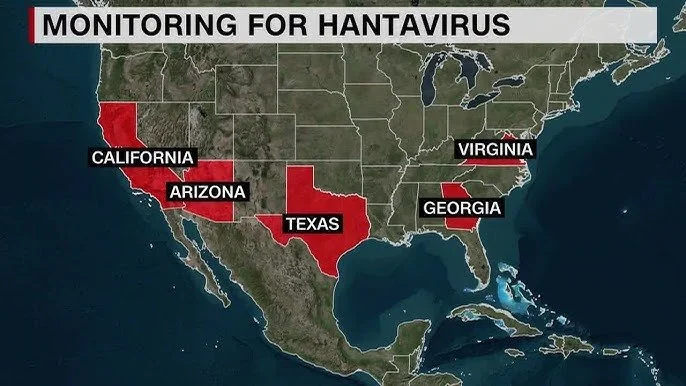
Public health agencies in Arizona, California, Georgia, Texas, and Virginia are monitoring people who returned to the United States after traveling aboard the MV Hondius, the Dutch-flagged expedition cruise ship linked to a multi-country hantavirus outbreak in the South Atlantic. The monitoring does not mean those travelers are sick. In the statements reviewed for this article, state officials consistently described the identified U.S. travelers as asymptomatic or with no information indicating illness, and they repeatedly characterized the risk to the general public as low.
The MV Hondius departed Ushuaia, Argentina, on April 1, 2026, and sailed an expedition itinerary that included remote South Atlantic stops such as Antarctica, South Georgia, Tristan da Cunha, Saint Helena, Ascension Island, and Cabo Verde. The World Health Organization reported that the ship was carrying 147 people, including 88 passengers and 59 crew from 23 nationalities. As of WHO’s May 4 notice, seven people had been identified as confirmed or suspected cases, including three deaths; illness onset among those cases ranged from April 6 to April 28.
The strain involved has been identified in public reports as Andes virus, a South American hantavirus that is unusual because it is the only hantavirus known to spread from person to person. Even so, public health officials emphasize that such spread is uncommon and generally requires close, prolonged contact with someone who is actively ill.
Where Former Cruise Travelers Are Being Monitored The clearest verified list of states where MV Hondius travelers are being monitored is Arizona, California, Georgia, Texas, and Virginia. New Jersey has also announced monitoring of two residents after a potential exposure connected to the broader outbreak, but its health department clarified that those residents were not passengers on the cruise ship; they were potentially exposed during air travel abroad to an infected person after that person had departed the vessel.9
WHAT CAN BE HELPFUL NOW.
If hantavirus exposure is suspected in a space, the main danger is stirring contaminated particles into the air.
Recommended product link:
Shop KN95 Mask
5.2 Bleach spray or EPA-registered disinfectant for surfaces
CDC guidance emphasizes that rodent urine and droppings should be sprayed with bleach solution or an EPA-registered disinfectant until very wet before cleanup, because dry sweeping or vacuuming can aerosolize contaminated material. A ready-to-use bleach spray can help households and workplaces avoid unsafe dry cleanup practices, especially in cabins, garages, sheds, storage spaces, vehicles, or other areas where rodents may have been present.
Recommended product link:
Clorox Healthcare Bleach Spray
5.3 Hand sanitizer for moments when soap and water are not available
WHO’s advice for the cruise ship event includes frequent hand hygiene, and CDC prevention guidance emphasizes avoiding contact with rodent-contaminated materials and cleaning up safely. Alcohol-based sanitizer is not a replacement for washing visibly dirty hands, but it is useful when people are traveling, waiting during screening, caring for others, or moving between spaces where soap and water are not immediately available.
Recommended product link:
Hand Sanitizer
5.4 Soap and moisturizer to support frequent handwashing
Frequent handwashing works best when people can keep doing it consistently. Soap removes dirt, organic material, and many germs from the skin, while moisturizer can reduce dryness and cracking that sometimes follows repeated washing. In a prolonged monitoring or quarantine situation, skin care becomes practical infection-prevention support because irritated skin can make people wash less often or less thoroughly.
Recommended product link:
Recommended Hand Soap
6. What to do if human-to-human spread remains a concern
If investigators continue to see evidence of person-to-person spread, the most important steps will still be directed by health authorities: isolate symptomatic people, trace close contacts, monitor symptoms through the incubation period, use respiratory precautions in healthcare settings, and maintain careful environmental cleaning. Individuals can support those measures by practicing hand hygiene, following quarantine or monitoring instructions, avoiding close contact with symptomatic people, and seeking care quickly if fever, gastrointestinal symptoms, cough, shortness of breath, or sudden respiratory illness develops after possible exposure.

Request a Consultation
Submit the inquiry form to initiate a detailed needs assessment and explore how our tailored solutions can advance your health objectives and operational efficiency.